
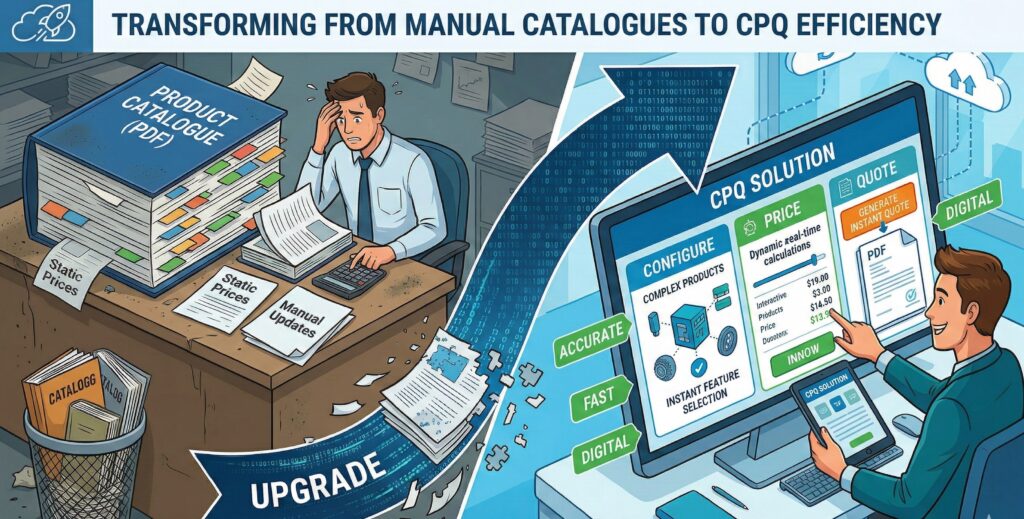
In many companies, the quoting process still looks like this:
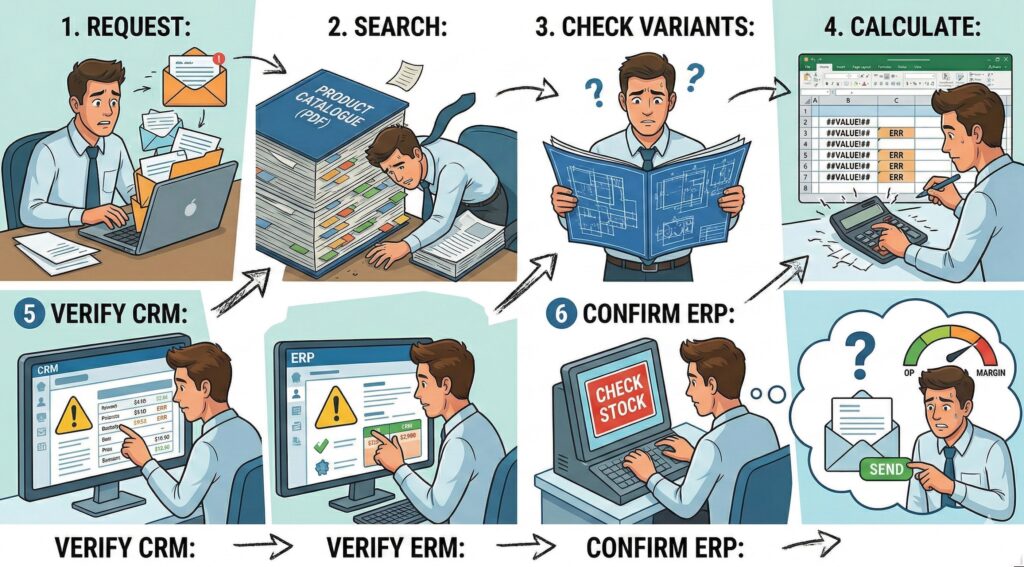
Sales receives a request.
They search through catalogs.
They check product variants.
They calculate pricing in Excel.
They verify data in CRM.
They confirm availability in ERP.
Before sending the offer, they pause:
Is everything correct? Is the margin right?
If this sounds familiar, your sales process may be costing you more than you realize.
The Hidden Problem: Growing Complexity
Product portfolios are expanding.
Configurations are becoming more technical.
Customers expect faster responses.
Margins are tighter than ever.
Yet many organizations still rely on:
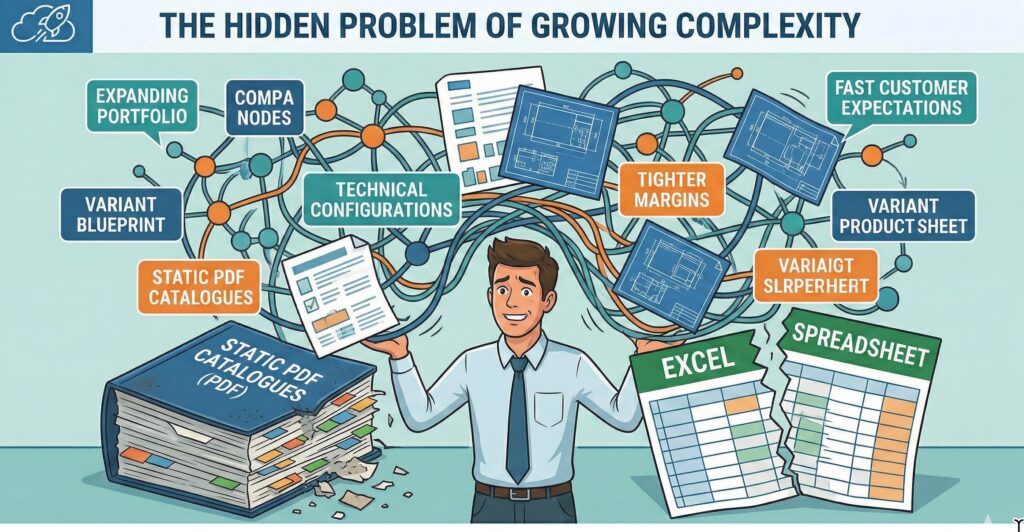
- Static PDF catalogs
- Excel spreadsheets
- CRM systems without configuration logic
- ERP systems not designed for dynamic quoting
These tools are not built to manage complex product configuration and pricing rules.
As complexity increases, manual effort grows -and so does the risk of errors.
The Consequences of Manual Quoting
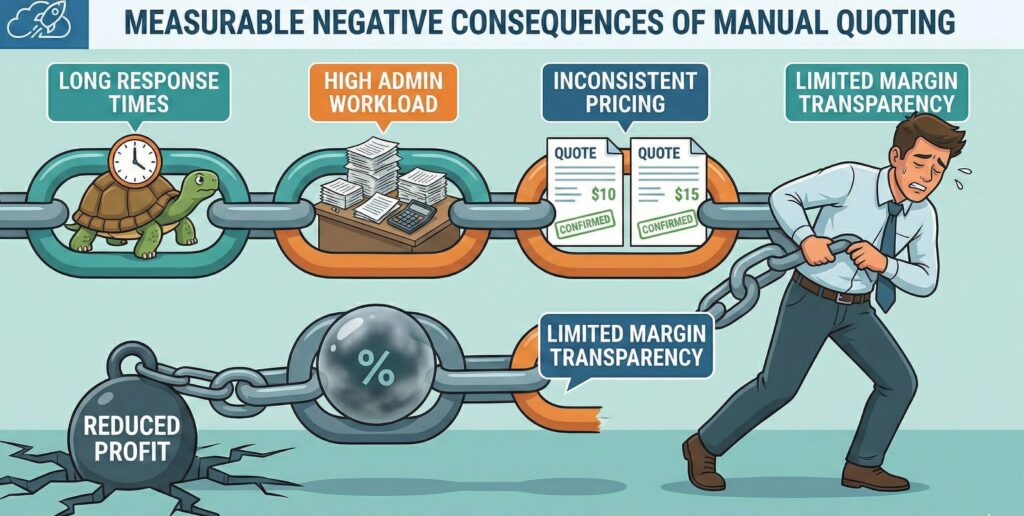
When quoting depends on manual steps, the impact is measurable:
- Long response times
- High administrative workload
- Inconsistent pricing
- Limited margin transparency
- Dependency on individual knowledge
- Increased error rates
Sales teams spend more time calculating than selling.
And when offers take too long, customers move on.
Why Many Companies Hesitate to Implement CPQ
Configure–Price–Quote (CPQ) systems promise automation and accuracy.
Yet many businesses hesitate because they believe:
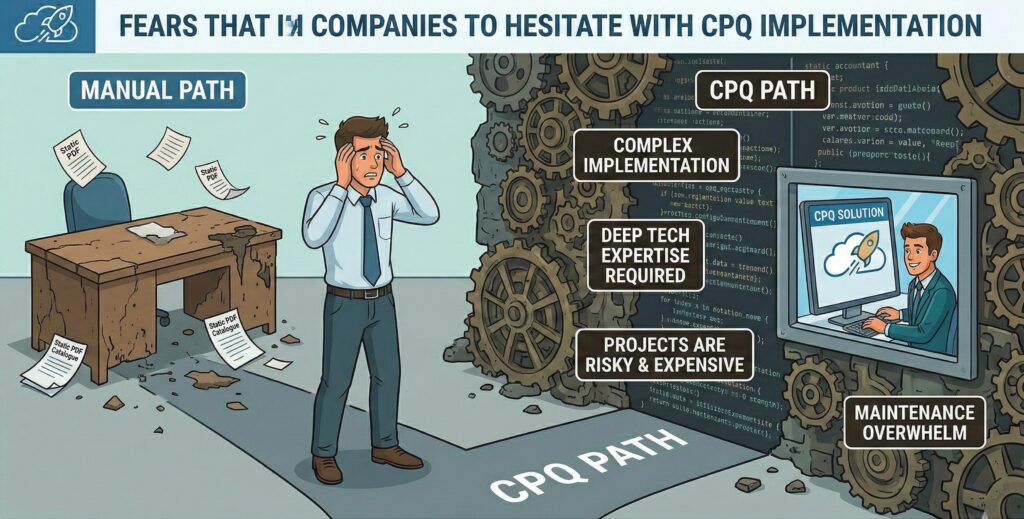
- Implementation is too complex
- Setup requires deep technical expertise
- Projects are risky and expensive
- Maintenance will be overwhelming
So they continue with familiar tools — even if those tools limit growth.
But staying with manual processes often carries the higher long-term cost.
What an Optimized Quoting Process Looks Like
Imagine a system where:
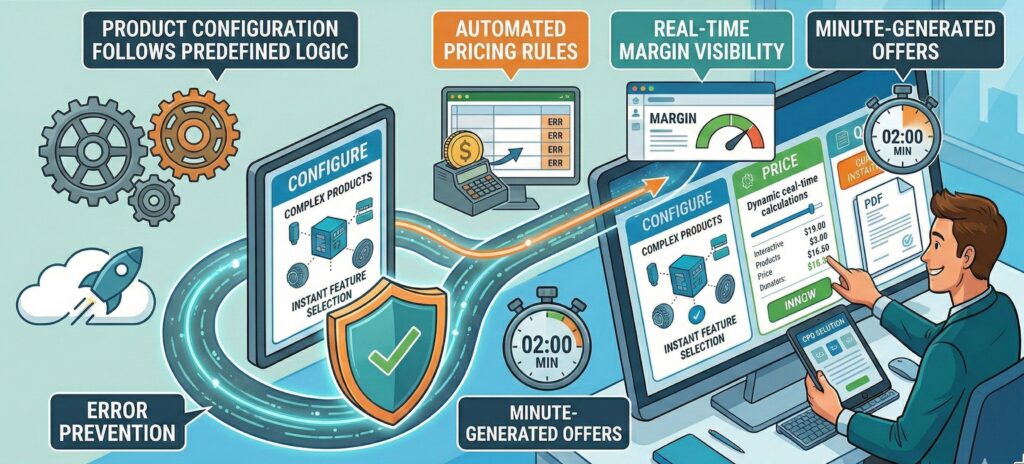
- Product configuration follows predefined logic
- Pricing rules are automated
- Margin is visible in real time
- Errors are prevented before the quote is created
- Offers are generated within minutes
Sales gains confidence.
Management gains transparency.
Customers receive faster responses.
This is not about replacing your CRM or ERP.
It’s about connecting them intelligently and closing the gap between product complexity and sales execution.
From Reactive Quoting to Scalable Selling
When your quoting process is structured and automated:

- Revenue becomes scalable
- Margins become controllable
- Sales cycles become shorter
- Teams become more productive
Instead of operating at the end of the value chain with maximum effort, you move to a position of control and clarity.
The Choice Is Simple
Continue managing complexity manually.
Or implement a system that turns complexity into competitive advantage.
If you want to reduce effort, increase accuracy, and gain full margin transparency
Book a Demo