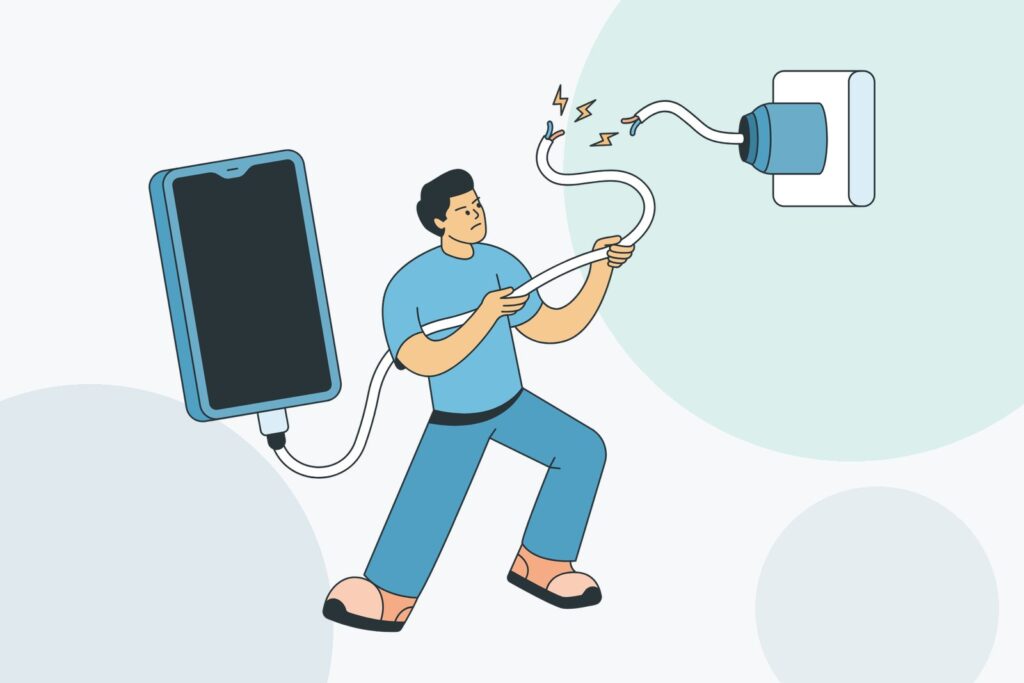
Your automations depend on services you do not control: the CRM, the payment provider, the shipping API, the AI model. Any of them can change an interface, a price, a limit — or switch a service off. Usually with notice. Sometimes overnight.
What changes, and what it breaks
| Change | What happens to your automation |
|---|---|
| A field is renamed or removed | Data silently goes missing — or the job stops |
| Authentication changes | Every call fails from one day to the next |
| Rate limits are lowered | Jobs that worked yesterday time out today |
| Prices change per call | A cheap workflow becomes an expensive one |
| The service is discontinued | The process has to be rebuilt under time pressure |
None of this is unusual. It is the normal life cycle of external services — and it means that an automation is never finished.
Build for change
The most effective measure is the least visible one: a thin layer between your process and the external service. When the service changes, only that layer has to be adapted — not every workflow that uses it.

Questions for every automation
- Which external services does it depend on — and who is told when one of them changes?
- What happens to the business process if a service is unavailable for a day?
- Is there an automated test against the real interface?
- Would we notice a silent change? — see The Silent Failure: When Automations Stop Without Telling Anyone.
The question is not whether an external service will change. It is whether you will notice before your customers do.
Want automations that survive the next API change? We build, run and monitor systems ourselves — and we know where automation pays off and where it becomes a risk.