
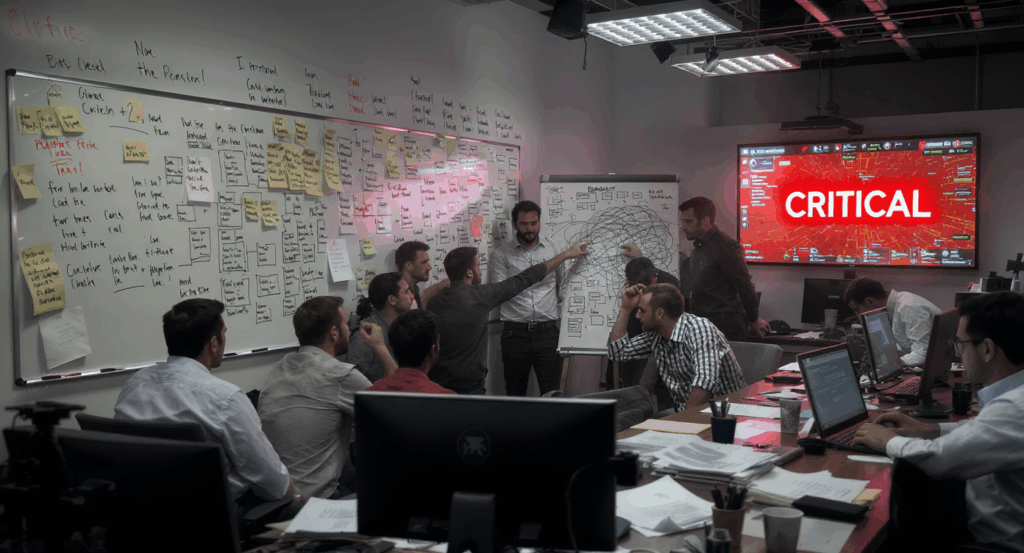
Why small lapses have large consequences, and how automation prevents them
In a lot of companies the picture repeats itself: an important deadline gets overlooked, and nobody knows who was actually responsible. It becomes especially critical when those lapses are make-or-break, when they decide orders, customer relationships, or financial security. The cause is rarely bad intent. More often it is a system failure, or more precisely, the absence of a system.
Outlook Takes Control — and We Barely Notice
What was meant as support took on a life of its own long ago: tools like Outlook now dictate the working day. Meetings, reminders, and responsibilities get created automatically, and so do the uncertainties that come with them.
- Who entered it?
- Who should have reacted?
- Was it really visible?
When the calendar steers your team instead of the other way around, it is only a matter of time before something slips through.
Systems Do Not Make Mistakes — People Do
The difference between a person and a machine? Machines do not forget deadlines. Move critical processes onto automated systems and you get an error rate close to zero. A reminder does not get overlooked, a task does not get forgotten, because there is no longer a human factor interfering.
Small Automations, Large Effect
One or two targeted automations are already enough to make sure no deadline gets missed again. And you do not have to let anyone go for it. Quite the opposite: you take load off your team, create clarity about who owns what, and avoid stressful rework or lost customers.
Conclusion: Automate Responsibility, Gain Reliability
In critical applications every second counts. If you want your company to operate reliably, efficiently, and without errors, you have to hand responsibility to where it is guaranteed to be carried: to automated systems that think along with you.
We implement that for you — fast, precise, and built to last.